Blox Fruits Calculator — Check If Your Trade Is a W, F, or L
How It Works (If You’ve Never Used It)
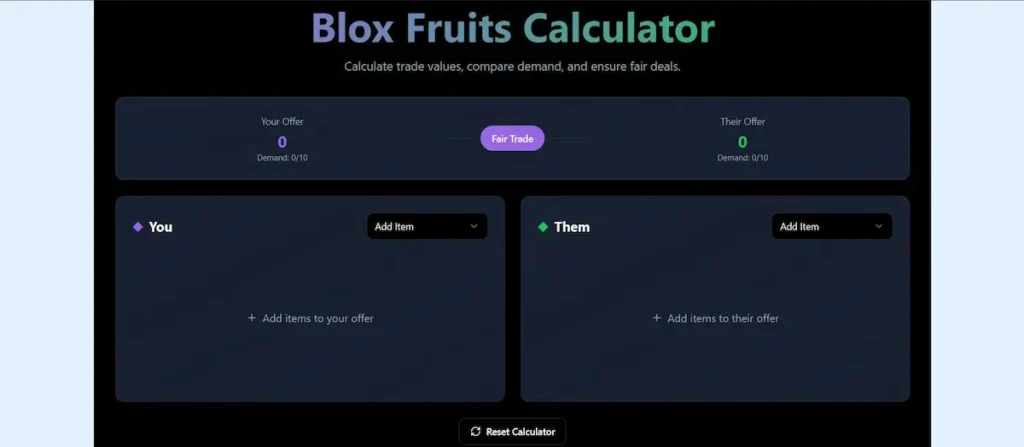
The calculator sitting above this is free and takes about 10 seconds to use. Add the fruits you’re giving on the left, add what you’re getting on the right, and it tells you if that’s a W, L, or F.
Works on mobile too — so you can check mid-trade without tabbing out of Roblox.
What W, F, and L Actually Mean
W means you’re getting more value than you’re giving. L means the opposite. F means both sides are close enough that neither player is losing.
The 10% Rule Nobody Explains
“Close enough” isn’t just vibes — the calculator uses a ±10% window for Fair trades. So if you’re trading a 290M fruit and getting back something worth 265M, that’s technically Fair, not a Loss.
Most sites just show you a color. Knowing the margin helps you decide whether to accept or push for a better offer.
Why Demand Can Flip a “Fair” Trade Into a Loss
Raw value numbers don’t tell the full story. A fruit sitting at 1.45B on paper is worthless if nobody wants it right now.
The Buddha Problem (and Why Raw Value Lies)
Buddha has one of the lower Robux values in the game — but extreme demand because it’s the best grinding fruit. If someone’s offering you a higher-value fruit that nobody’s trading for, your “W” on paper could sit in your inventory forever.
The calculator shows demand ratings alongside values. Pay attention to that column — a fruit with high demand and lower value often trades faster and better than a high-value fruit with no buyers.
Normal vs Permanent — They’re Not the Same Trade
Normal fruits and Permanent fruits look identical in-game but they’re completely different in the economy. Permanent means it’s tied to your account via Robux — you can re-roll it anytime without grinding.
Always toggle to the correct version before you check a trade. Comparing a Permanent offer against a Normal value will make the trade look way better than it actually is — that’s one of the oldest tricks in the book.
The Meta Right Now (2026)
Kitsune is sitting at 290M. Dragon is at 1.45B. Those are the anchors most serious traders price everything else around.
Why Dark Kitsune’s Price Drop Should Scare You
Dark Kitsune launched in December 2025 at 6,000+ Robux. By January 2026 it had settled to around 4,000. That’s a massive drop in under two months — and anyone using a calculator that wasn’t tracking it in real time was overpaying badly.
Values in Blox Fruits aren’t fixed. New updates, new fruits, PvP meta shifts — they all move the market fast. Using stale data isn’t just slightly wrong, it’s the difference between a W and getting completely farmed.
The Real Reason 60% of New Players Get Scammed
It’s not stupidity. New players get scammed because fruit values change faster than any wiki or static list updates — and most traders on the server know that and count on it.
Someone offers you a “rare” fruit, talks it up, rushes you. You don’t know if it’s worth 50M or 500M. You accept. You just gave up value you spent hours grinding for.
That’s the actual problem a trade checker solves — not just math, but removing the pressure window scammers rely on. Check the calculator, see the verdict, take your time. The trade isn’t going anywhere if it’s legitimate.
Two Questions We Actually Get Asked
Are the values real or just guesses?
They’re community-sourced from Discord servers, Reddit, FruityBlox, and BloxFruitsValues — which is exactly where actual trading happens. There’s no official Roblox value list. The community is the source.
What if the values match but the trade still feels off?
Check the demand ratings. Equal value doesn’t mean equal desirability. A fruit nobody’s chasing right now is harder to move later — and if you ever need to trade it again, you’ll be on the losing side of that dea